

Can stacker parking lifts be installed in basements?
Can stacker parking lifts be installed in basements? This is a question that many property owners, especially those with basement spaces, often ask. As a stacker parking lifts supplier, I'd like to delve into this topic to provide you with a comprehensive understanding.
Technical Feasibility
Structural Considerations
The first and foremost factor to consider is the structural integrity of the basement. Basements are designed to bear certain loads, and installing a stacker parking lift adds an additional burden. The weight of the lift itself, along with the parked vehicles, can be substantial. Before installation, a thorough structural assessment by a professional engineer is necessary. The basement floor should be able to support the concentrated loads exerted by the lift's columns and platforms. For example, if the basement floor has cracks or is made of a weak concrete mix, it may need reinforcement. This could involve adding steel beams or strengthening the concrete through techniques like shotcreting.
Height Requirements
Stacker parking lifts come in various designs, each with specific height requirements. In a basement, the ceiling height is a critical constraint. Most stacker parking lifts need enough vertical space to lift vehicles safely. A typical two - level stacker may require a ceiling height of at least 4 - 5 meters to accommodate the lift mechanism and the parked vehicles on both levels. If the basement has a low ceiling, it may not be suitable for a standard stacker lift. However, there are some low - profile models available that can operate in relatively restricted vertical spaces.

Ventilation and Drainage
Basements often have issues with ventilation and drainage. Stacker parking lifts generate heat during operation, especially if they are motor - driven. Adequate ventilation is required to dissipate this heat and prevent the build - up of harmful fumes, such as carbon monoxide from vehicle exhausts. Additionally, proper drainage is essential to prevent water accumulation around the lift. Water can damage the lift's electrical components and cause corrosion of the metal parts. If the basement has poor ventilation or drainage, modifications may be needed before installing the stacker parking lift.
Types of Stacker Parking Lifts Suitable for Basements
Two Level Multi - platform Parking Lift
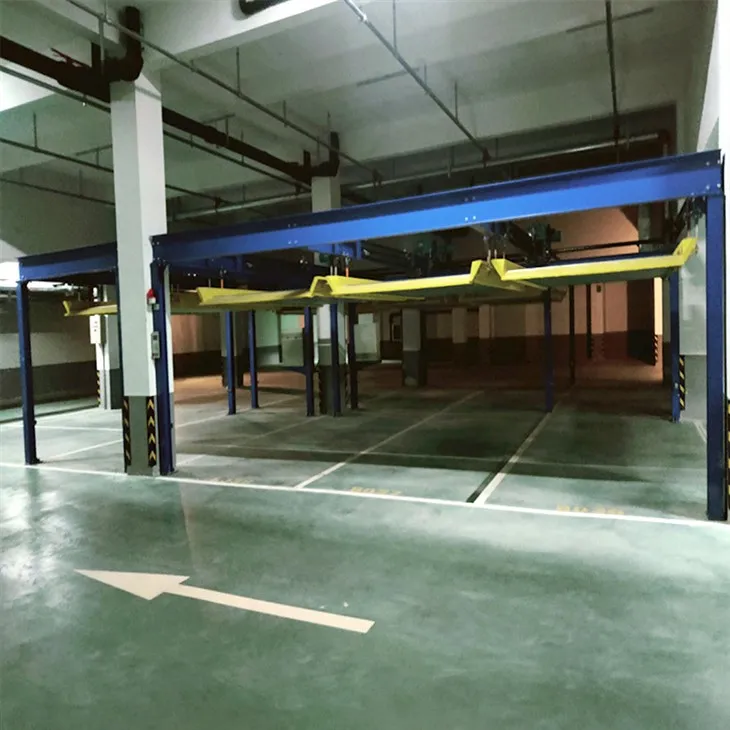
The Two Level Multi - platform Parking Lift is a popular choice for basements. It can effectively double the parking capacity in a limited space. This type of lift consists of two platforms, one on top of the other. The lower platform can be accessed directly, while the upper platform is lifted and lowered using a hydraulic or mechanical system. It is relatively compact and can be customized to fit the dimensions of the basement. The multi - platform design allows for easy access to parked vehicles, and it can be installed in both small and large basements.
The Motor Drives The Two - post Parking Lift
The The Motor Drives The Two - post Parking Lift is another option. It uses a motor to drive the lifting mechanism, which is usually attached to two vertical posts. This lift is known for its stability and reliability. In a basement, it can be installed against a wall, saving valuable floor space. The two - post design provides a wide opening for vehicle entry and exit, making it convenient for users. It is suitable for basements with sufficient width to accommodate the posts and the parked vehicles.
Multi Pit Parking System
The Multi Pit Parking System is a more advanced solution for basements. It involves digging pits in the basement floor to accommodate multiple levels of parking. This system can significantly increase the parking capacity in a relatively small area. However, it requires a more complex installation process and a suitable basement structure. The pits need to be properly waterproofed to prevent water seepage, and the lift mechanism must be designed to operate smoothly in the pit environment.
Advantages of Installing Stacker Parking Lifts in Basements
Space Optimization
One of the main advantages of installing stacker parking lifts in basements is space optimization. Basements are often underutilized spaces, and a stacker lift can transform them into valuable parking areas. In urban areas where land is scarce, maximizing the use of basement space for parking can be a cost - effective solution. For example, a small basement that can only accommodate one vehicle conventionally can be made to park two or more vehicles with a stacker lift.
Security
Basements generally offer a higher level of security compared to open - air parking lots. By installing a stacker parking lift in the basement, vehicles are protected from theft, vandalism, and the elements. The controlled access to the basement can be further enhanced with security systems such as surveillance cameras and access control devices.
Aesthetics
Stacker parking lifts can also improve the aesthetics of the basement. They are designed to be sleek and modern, and they can make the basement look more organized and professional. This can be beneficial for commercial properties, such as office buildings or shopping malls, where the appearance of the parking area is important.
Challenges and Solutions
Cost
The cost of installing a stacker parking lift in a basement can be relatively high. It includes the cost of the lift itself, installation, structural modifications, and any necessary electrical and plumbing work. However, in the long run, the increased parking capacity can lead to cost savings. For example, if a property owner no longer needs to rent additional off - site parking spaces, the initial investment in the stacker lift can be recouped over time.
Maintenance
Stacker parking lifts require regular maintenance to ensure their safe and efficient operation. In a basement environment, the maintenance can be more challenging due to the limited access and the potential for moisture and dirt. However, by following a proper maintenance schedule and working with a professional maintenance team, these challenges can be overcome. Regular inspections, lubrication of moving parts, and checking of electrical connections are essential for the longevity of the lift.
Conclusion
In conclusion, stacker parking lifts can be installed in basements, but it depends on several factors such as the structural condition, height, ventilation, and drainage of the basement. There are different types of stacker parking lifts available, each with its own advantages and suitability for basement installation. The benefits of installing a stacker lift in a basement, including space optimization, security, and aesthetics, often outweigh the challenges.
If you are considering installing a stacker parking lift in your basement, we are here to help. As a professional stacker parking lifts supplier, we have the expertise and experience to assess your basement and recommend the most suitable solution. Contact us for a detailed consultation and let's discuss how we can meet your parking needs.
References
- Building codes and standards related to basement construction and parking lift installation.
- Manufacturer's specifications for different types of stacker parking lifts.
- Engineering studies on the structural capacity of basements for additional loads.