

What is the installation difficulty of lift - slide parking systems?
What is the installation difficulty of lift - slide parking systems?
As a supplier of lift - slide parking systems, I've had my fair share of experiences dealing with the installation process. Lift - slide parking systems, also known as lifting and traversing parking systems, are an efficient solution for maximizing parking space in areas with limited land availability. However, the installation of these systems is not without its challenges.
Site Assessment and Preparation
One of the initial and most crucial steps in installing a lift - slide parking system is conducting a comprehensive site assessment. The site must meet certain structural and spatial requirements. For instance, the ground needs to have sufficient load - bearing capacity to support the weight of the parking system and the vehicles. If the ground is unstable or has a low load - bearing capacity, additional foundation work may be necessary, which can significantly increase the installation difficulty and cost.
The available space also plays a vital role. The layout of the site needs to be carefully considered to ensure that there is enough room for the installation of the lift - slide system, as well as for the smooth entry and exit of vehicles. Obstructions such as columns, walls, or other structures may need to be removed or modified. Moreover, the access points for vehicles, including ramps and driveways, need to be properly designed to fit the system.
Technical Complexity
Lift - slide parking systems are complex mechanical and electrical devices. They consist of multiple components such as steel structures, lifting mechanisms, traversing platforms, control systems, and safety devices. Each of these components needs to be precisely installed and integrated to ensure the proper functioning of the system.
The steel structure, which forms the framework of the parking system, must be assembled with high precision. Any misalignment in the installation of the steel beams or columns can lead to structural instability, affecting the safety and performance of the entire system. The lifting and traversing mechanisms are also highly technical. These mechanisms are responsible for moving the vehicles vertically and horizontally within the parking system. Installing them requires a deep understanding of mechanical engineering principles and strict adherence to the manufacturer's instructions.
The control system is the brain of the lift - slide parking system. It coordinates the movement of all the components and ensures the safe operation of the system. Installing the control system involves wiring, programming, and testing. Any errors in the wiring or programming can result in malfunctions, such as incorrect vehicle positioning or safety system failures.
Safety Regulations and Standards
Compliance with safety regulations and standards is non - negotiable when installing lift - slide parking systems. These systems are designed to handle heavy loads and operate in a dynamic environment, so safety is of utmost importance. There are various national and international safety standards that govern the installation, operation, and maintenance of parking systems.
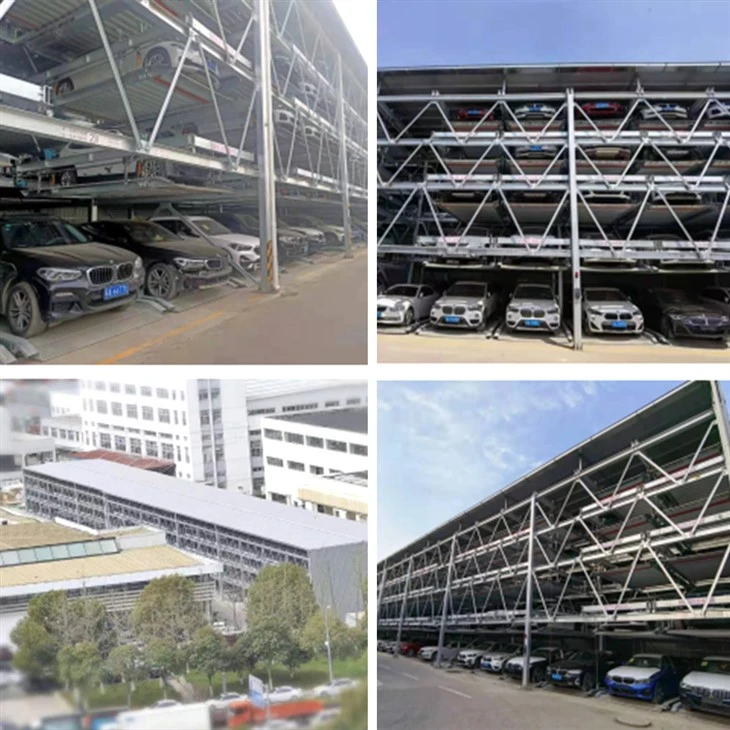

During the installation process, we need to ensure that all safety devices, such as limit switches, anti - fall devices, and emergency stop buttons, are properly installed and functioning. These devices are crucial for preventing accidents, such as vehicle falls or collisions. Additionally, the installation must meet fire safety requirements, including proper ventilation and fire - resistant materials.
Coordination with Other Parties
Installing a lift - slide parking system often involves coordinating with multiple parties. This may include architects, contractors, electricians, and local authorities. Architects need to be involved from the early stages to ensure that the parking system design is integrated with the overall building design. Contractors are responsible for the on - site construction work, such as foundation building and steel structure assembly. Electricians are needed to install the electrical components of the system.
Local authorities play a key role in issuing permits and ensuring that the installation complies with local building codes and regulations. Obtaining the necessary permits can be a time - consuming process, and any delays can hold up the entire installation schedule. Coordinating with these different parties requires effective communication and project management skills to ensure that the installation progresses smoothly.
Examples of Different Lift - Slide Parking Systems and Their Installation Difficulties
Let's take a look at some specific types of lift - slide parking systems and their associated installation difficulties.
The 7 Level Puzzle Car Parking Systems are more complex compared to lower - level systems. With seven levels, the height of the structure is significantly increased, which means more precise installation of the steel structure to ensure stability. The lifting mechanism also needs to be more powerful and reliable to handle the vertical movement of vehicles across multiple levels. Additionally, the control system for a seven - level system is more sophisticated, as it needs to manage the movement of vehicles in a more complex parking layout.
The Ground Floor High - rise Two - storey Lifting and Traversing Parking System has its own unique challenges. Since it is often installed on the ground floor of a building, there may be more restrictions in terms of space and access. The installation may need to be coordinated with the building's existing infrastructure, such as plumbing and electrical systems. Also, ensuring the smooth transition of vehicles between the ground floor and the upper level requires careful design and installation of the traversing platform.
Another example is the 7 Level Puzzle Car Parking Systems when installed in a factory setting. Factory environments may have different safety requirements and space constraints compared to commercial or residential areas. The installation needs to be carried out in a way that does not disrupt the normal operation of the factory. There may also be specific requirements for dust and noise control during the installation process.
Conclusion
In conclusion, the installation of lift - slide parking systems is a complex process that involves multiple aspects, including site assessment, technical complexity, safety regulations, and coordination with other parties. Each type of lift - slide parking system has its own set of installation difficulties, depending on its design, location, and application.
However, despite these challenges, lift - slide parking systems offer significant benefits in terms of space utilization and convenience. As a supplier, we are committed to providing high - quality products and professional installation services. Our experienced team of engineers and technicians has the expertise to overcome the installation difficulties and ensure that the lift - slide parking systems are installed safely and efficiently.
If you are interested in our lift - slide parking systems and would like to discuss the installation process or make a purchase, please feel free to contact us for further details and a customized solution.
References
- "Parking System Design and Installation Guide", Industry Handbook, 20XX
- "Safety Standards for Mechanical Parking Systems", National Regulatory Document, 20XX
- Case studies of lift - slide parking system installations from our company's archives.