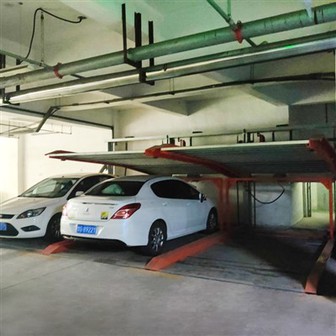
Technical Principles and Key Components of Fully Automatic Parking Systems
Technical Principles:
A fully automatic parking system (APS) leverages integrated technologies such as sensors, control algorithms, and actuators to autonomously detect available parking spaces and maneuver the vehicle into them without human intervention. The system operates based on the following principles:
Environmental Perception:
Using a combination of ultrasonic sensors, radar, LiDAR, and cameras, the system scans the surroundings to detect available parking spaces, measure distances, identify obstacles, and analyze space geometry.
Path Planning:
Once a suitable parking spot is identified, the system calculates an optimal parking trajectory using advanced algorithms (e.g., A*, RRT, or Bezier curves), considering vehicle dimensions, steering limits, and obstacle locations.
Motion Control:
The control unit sends commands to the vehicle's steering, acceleration, braking, and transmission systems to execute the parking maneuver accurately, adjusting in real time based on sensor feedback.
Localization and Mapping:
Some advanced APS use SLAM (Simultaneous Localization and Mapping) or HD maps to localize the vehicle with high precision, especially in structured environments like multi-story parking lots.
V2X Communication (optional):
In smart cities or intelligent parking lots, the system can receive parking space data from external infrastructure via Vehicle-to-Everything communication, improving efficiency and accuracy.

Key Components:
Sensor Suite:
Ultrasonic Sensors: Measure short-range distances around the vehicle.
Radar (Millimeter-wave): Detects moving and static objects, even in poor visibility.
Cameras: Provide visual input for space recognition and obstacle detection.
LiDAR (optional in high-end systems): Offers precise 3D spatial mapping.
ECU (Electronic Control Unit):
The core processor that analyzes sensor data, plans paths, and issues control commands. Often integrated with the vehicle's ADAS (Advanced Driver Assistance System) platform.
Drive-by-Wire Actuation System:
Enables electronic control of steering, throttle, brakes, and gear shifting. Key for seamless execution of autonomous maneuvers.
Human-Machine Interface (HMI):
Allows users to activate the system, monitor its status, and receive notifications via dashboard screens, smartphone apps, or key fobs.
Software Algorithms:
Embedded AI and control algorithms ensure robust decision-making, obstacle avoidance, and fault tolerance during parking.
Connectivity Modules (optional):
For remote control, data upload, and integration with smart parking infrastructure via LTE/5G or V2X communication protocols.
Summary:
Fully automatic parking systems represent the convergence of perception, planning, and control technologies, delivering a safe, convenient, and intelligent parking experience.